
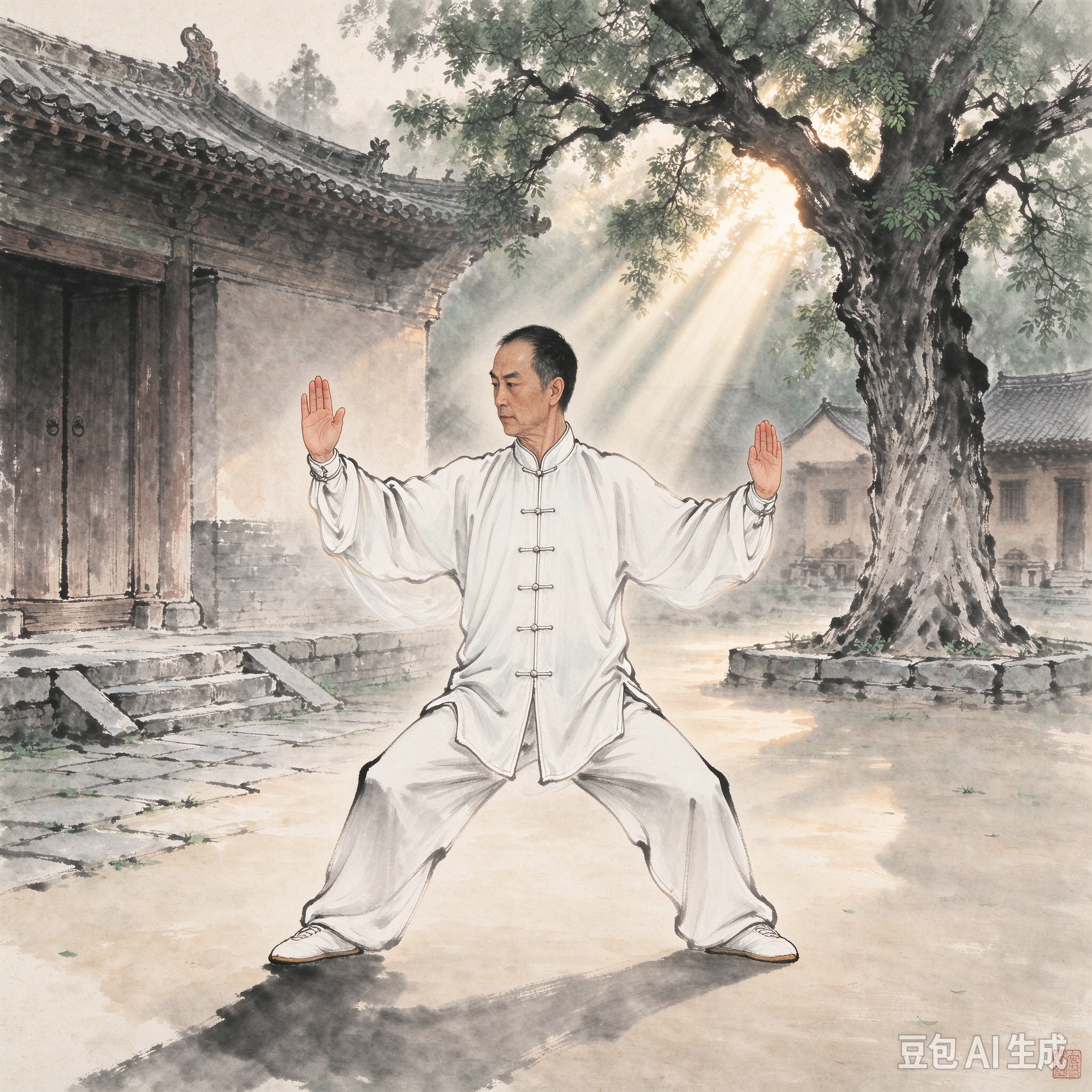
Many people fall in love with Tai Chi’s gentle, circling movements, yet few know its layered history, woven together by legend and real records.
A popular old tale says the Taoist sage Zhang Sanfeng invented Tai Chi after watching a snake and a sparrow fight. This poetic story has been passed down for centuries, but modern historians find little solid evidence to back it up.
The traceable birth of Tai Chi dates back to the late Ming and early Qing dynasties, around the 17th century. In Chenjiagou, a quiet village in Wenxian, Henan Province, martial artist Chen Wangting shaped the first complete Tai Chi system. Drawing on battlefield combat skills, local folk boxing, Taoist breathing exercises, meridian theory from traditional Chinese medicine, and the Yin-Yang philosophy from “I Ching”, he created Chen-style Tai Chi, the original root of all major styles today. From the very beginning, its core idea was summed up in a famous saying: “Use intent, not brute force.”
For decades, this art stayed mostly within the Chen family. Then Yang Luchan, a gifted student, learned Chen-style and adapted it into softer, slower Yang-style Tai Chi, suitable for ordinary people rather than only fighters. It was Yang Luchan who made the phrase “Four ounces move a thousand pounds”. famous around the country. This well-known proverb perfectly explains Tai Chi’s magic: instead of clashing hard force against hard force, you yield, guide, and redirect energy. Later, Wu, Wu (Hao) and Sun styles gradually branched out, each adjusting the pace, posture and focus while keeping the core Tai Chi principles: softness overcoming hardness, stillness within motion, and harmony of body, breath and mind. Another old saying goes: "When there is movement, yin and yang divide; when still, they reunite." It captures the balance at the heart of every form.
In the 20th century, Tai Chi spread beyond villages and cities. It moved overseas, winning hearts for its health benefits and quiet wisdom. In 2020, Taijiquan was inscribed on the UNESCO Representative List of the Intangible Cultural Heritage of Humanity, recognised as a precious living tradition of China.
Today, when we practise Tai Chi, we carry not just a set of movements. We carry an ancient dialogue between martial skill, philosophy and healing. It is not merely slow exercise; it is a living heritage that keeps evolving, quietly connecting the past and the present.